
Category

Graphic Design

Principles, trends, career advice and design theory from working designers.

A thick block of blank cream paper on a warm oak desk with a thin wedge sliced cleanly out of one corner, the cut-away sliver lying beside a brass paper knife in soft natural light

How to Price Design When You Outsource It, Without Your Margin Disappearing

Most agencies price outsourced design as a markup on the supplier's invoice, and most of them are quietly losing money on small jobs because the biggest cost on the job is not the supplier — it is their own time. This is the sell-side system: markup versus margin, the fully loaded unit cost, a rate card by complexity class with worked numbers, retainer floors on a flat-fee queue, the seven places margin leaks after the price is set, and the KPIs that prove it is working.


Overhead view of a smooth, digitally rendered botanical art print in sage and terracotta, with a sheet of tracing paper clipped over its right half on which the same leaves are redrawn by hand in graphite pencil, a pencil and eraser beside it on a pale oak desk

Can You Legally Sell AI-Generated Designs? The Five Questions That Decide It

Usually yes — but legal to sell and safe to sell are different answers, and most guides only give the first. Selling an AI-generated design runs through five separate rulebooks: the tool's licence, copyright, other people's rights, the marketplace's policy and the promises in your own contract. This is each one, where the law stands as of September 2026, and the workflow that keeps a design sellable and defensible.

Blank cream design pieces on a warm linen desk increasing in complexity, from a small business card and flat sheets to a standing folded brochure and a plain carton, beside a wooden hourglass on a terracotta paper square in soft natural light

Design Turnaround Benchmarks by Asset Type: How Long Design Really Takes, and Where the Time Goes

Ask how long a brochure takes and you will be told "three to five days" or "two weeks", and both answers are right, because they are measuring different clocks. This is the benchmark set by asset type: designer hours, time to first draft, typical revision rounds and realistic elapsed time to an approved final for more than thirty common deliverables. It also shows the part that decides your deadline, which is how long the work sits waiting for feedback, not how long the designer spends on it.

An open spiral-bound workbook with blank ruled lines and empty checkboxes on a warm linen desk, beside a blank bordered certificate card and three identical sage-ribboned stacks of blank cards, in soft natural light

Course and Cohort Collateral: Every Asset a Course or Coaching Business Needs, and the Ones You Should Only Build Once

Every guide to course materials is about one workbook. A course or coaching business actually runs on thirty-three asset types across five stages — sell, enrol, deliver, complete, re-enrol — and the expensive ones are not the ones people plan for. This is the full inventory, the three layers that decide how each asset scales, the dated per-cohort layer that quietly eats most of the design budget, workbook, slide and certificate specs, and the system that takes a four-cohort year from 195 design hours to 124 and the year after from 112 to 31.

A small brass balance scale on a warm linen desk with a short stack of blank cards in one pan and a single thicker blank card in the other, in soft natural light

White-Label Design Pricing Benchmarks: What Resellers Actually Pay, in a Unit You Can Compare

Every published white-label design price is quoted in a different unit — per asset, per hour, per month — which makes the whole market look like noise. This is the benchmark set converted into one comparable number: landed cost per accepted deliverable, with buy-side ranges by complexity class, the four engagement models priced against each other, the off-invoice costs that add about a third to every quote, and a 30-day protocol for producing your own numbers instead of borrowing anyone else's.

Overhead editorial flat lay of a vetting desk — a printed checklist, an unsigned agreement, colour swatch fans, a loupe over a printed proof sheet and a folded garment sample, all blank and unbranded, on a warm cream surface

How to Vet a White-Label Design Partner: The Twelve Questions, and the Red Flags

Every guide to choosing a white-label design partner gives you seven or ten questions and stops there. That is the easy half. The hard half is knowing what a good answer sounds like, what a rehearsed answer sounds like, and which single bad answer should end the conversation. This is the twelve-question vetting protocol, the leak surfaces nobody checks, the paid pilot that actually reveals competence, and the scorecard for comparing partners without kidding yourself.

Overhead view of an empty wooden type case, blank cream specimen cards, a brass loupe, a tied document wallet and paper swatches arranged on a warm neutral surface

Font Licensing for Resellers: Who Pays, What Transfers, and What Gets You Caught

The operational guide to font licensing for anyone who designs on behalf of someone else — which of the seven licence types you actually need, who in a four-company chain has to hold one, what changes depending on how you hand off the files, what it costs per project, how compliance claims unfold, and the contract clauses and register that keep it all bounded.

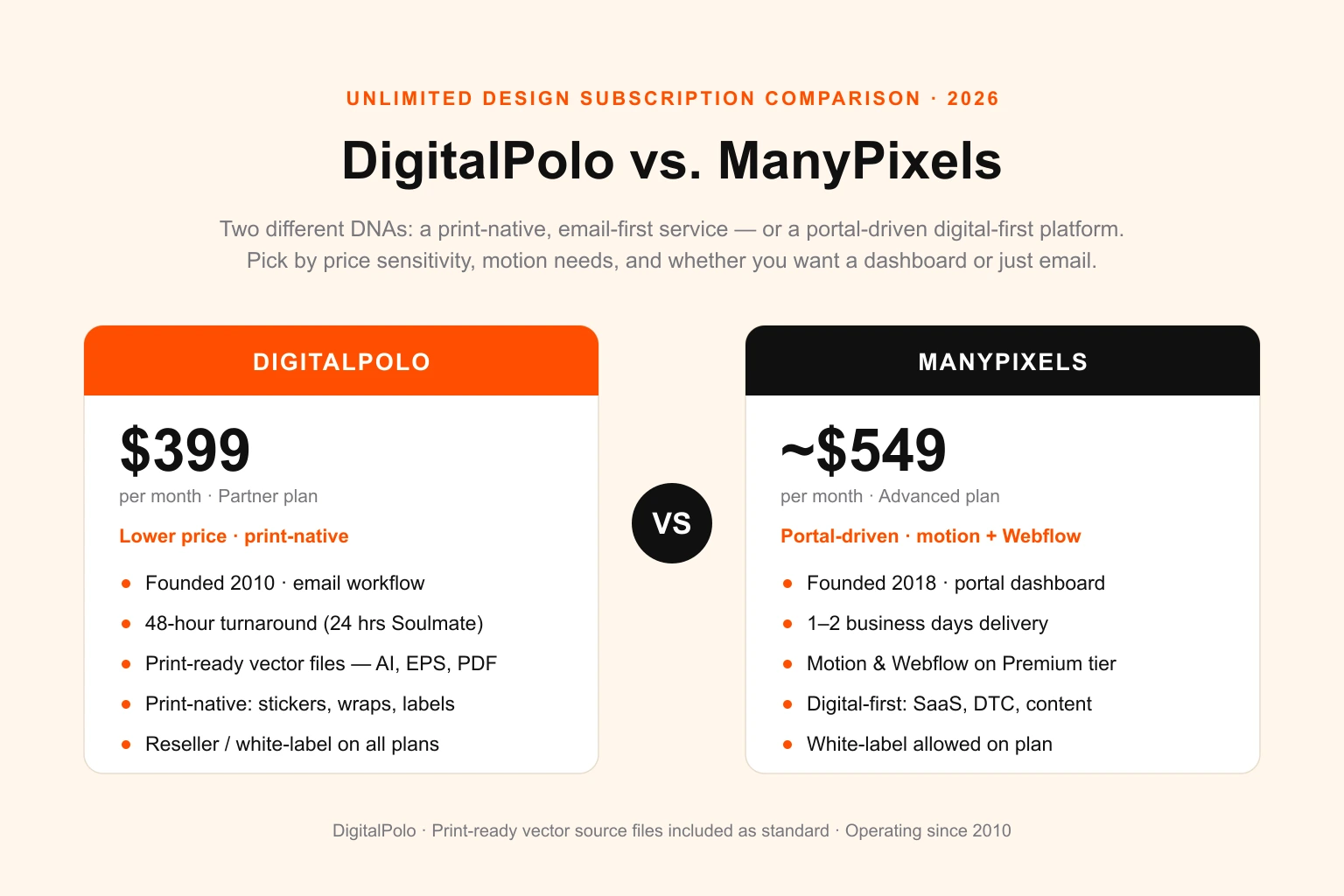
DigitalPolo vs ManyPixels compared for 2026 — DigitalPolo at $399/month with 48-hour turnaround and print-ready vector source files set against ManyPixels' Advanced and Premium portal-based plans, shown as a side-by-side unlimited design subscription comparison

DigitalPolo vs. ManyPixels: Side-by-Side Comparison for 2026

DigitalPolo vs. ManyPixels compared head-to-head for 2026 — pricing, turnaround, what each service designs, print-ready file delivery, motion and web scope, and reseller use. A practical comparison to help small businesses, agencies, and print-trade buyers pick the right unlimited design subscription.

Graphic Design and AI: The 2026 Reality

Graphic Design and AI: The 2026 Reality

AI has transformed graphic design faster than any technology before it. This guide covers the major AI design tools, the 30% rule, and the honest answer to whether AI will replace graphic designers — with a clear verdict for 2026.

10 Business Card Design Mistakes to Avoid

10 Business Card Design Mistakes to Avoid

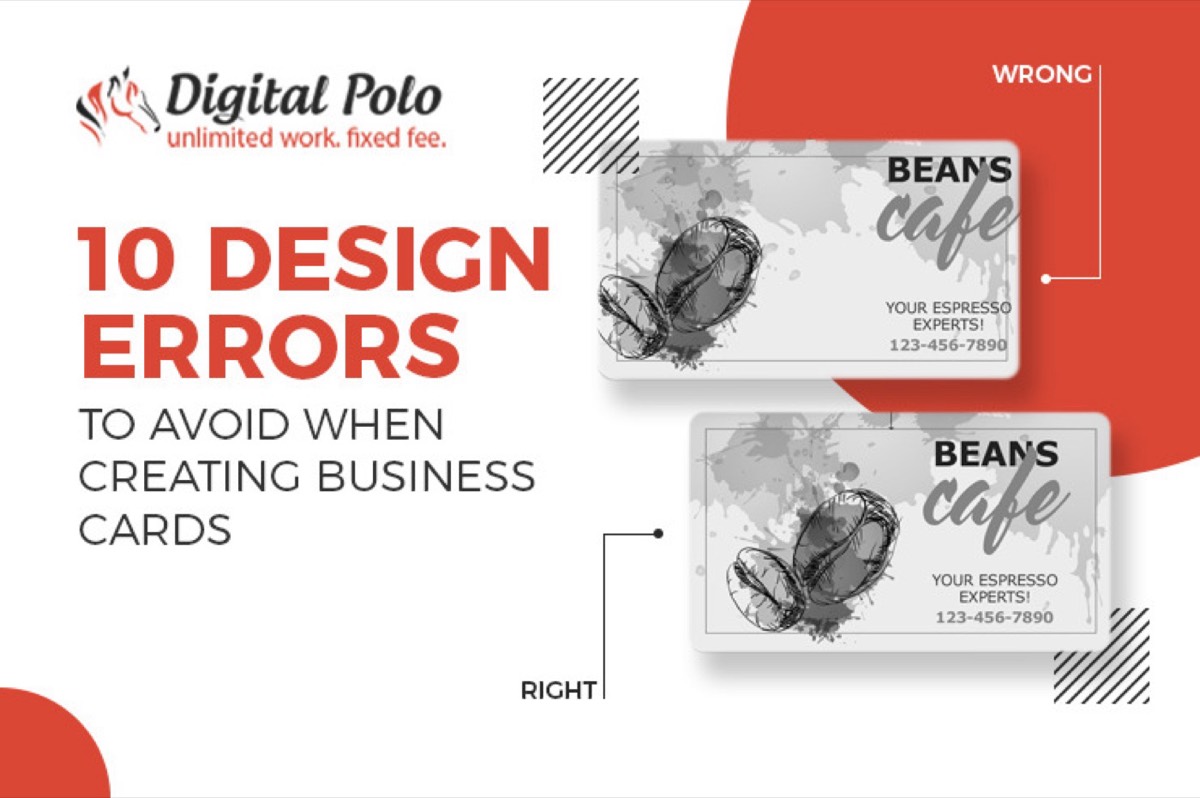
A poorly designed business card undermines the impression you've just made in person. These 10 common business card design mistakes — from font size to paper weight to missing CTAs — are easy to avoid once you know what to look for.

WhatsApp
WhatsApp$399/mo