"What's the best graphic design company?" is one of the most common questions business owners ask — and the honest answer is that it depends on what you're buying. A venture-backed startup launching a brand has very different needs from a restaurant that wants a new menu, or an agency that needs overflow capacity every week.
So instead of pretending one name wins for everyone, this guide does two things: it gives you a framework for choosing, then compares the main types of graphic design company in 2026 — with real examples in each category and who each is best for.
How to judge a graphic design company
Before you compare names, compare on these six criteria. They explain almost every difference in price and outcome.
- Portfolio range. A strong company shows breadth and consistency across the formats you actually need — not just one flattering category. Ask to see work in your specific format (packaging, decks, web UI, etc.).
- Source files and rights. You should own editable source files (AI, EPS, PSD, PDF, Figma) and full commercial rights. White-label or reseller rights matter if you deliver design to your own clients.
- Turnaround and revisions. Ask for a clear SLA and revision policy. Open-ended revision rounds and rush fees are where project pricing quietly doubles.
- Pricing model. Per-project, hourly, retainer and flat subscription each suit different needs. For steady, varied work, a flat unlimited fee is the most predictable.
- Stability and track record. Years in operation, real reviews and a real team reduce the risk of a partner disappearing mid-project.
- Communication. How fast and clearly a company replies before you pay predicts the whole relationship.
The four types of graphic design company
| Type | Typical cost | Speed | Best for |
|---|---|---|---|
| Full-service agency | $5,000 – $150,000+ / project | Weeks – months | Big-budget brand launches & strategy |
| Unlimited design subscription | $300 – $899 / month flat | 24 – 48 hours per task | Ongoing, multi-format design needs |
| Boutique / specialist studio | $3,000 – $40,000 / project | Weeks | A single deep specialism (e.g. packaging) |
| Freelance marketplace | $5 – $500 / asset | Hours – days, variable | One-off or experimental assets |
1. Full-service design & branding agencies
Agencies like Pentagram, Landor and IDEO sit at the top end. You're paying for strategy, research, senior art direction and account management — and the output reflects it. This is the right call for a once-in-a-decade rebrand with a five- or six-figure budget.
Best for: large companies and funded startups doing a strategic brand launch. Watch for: high minimums, long timelines, and change-order fees on revisions.
2. Unlimited graphic design subscriptions
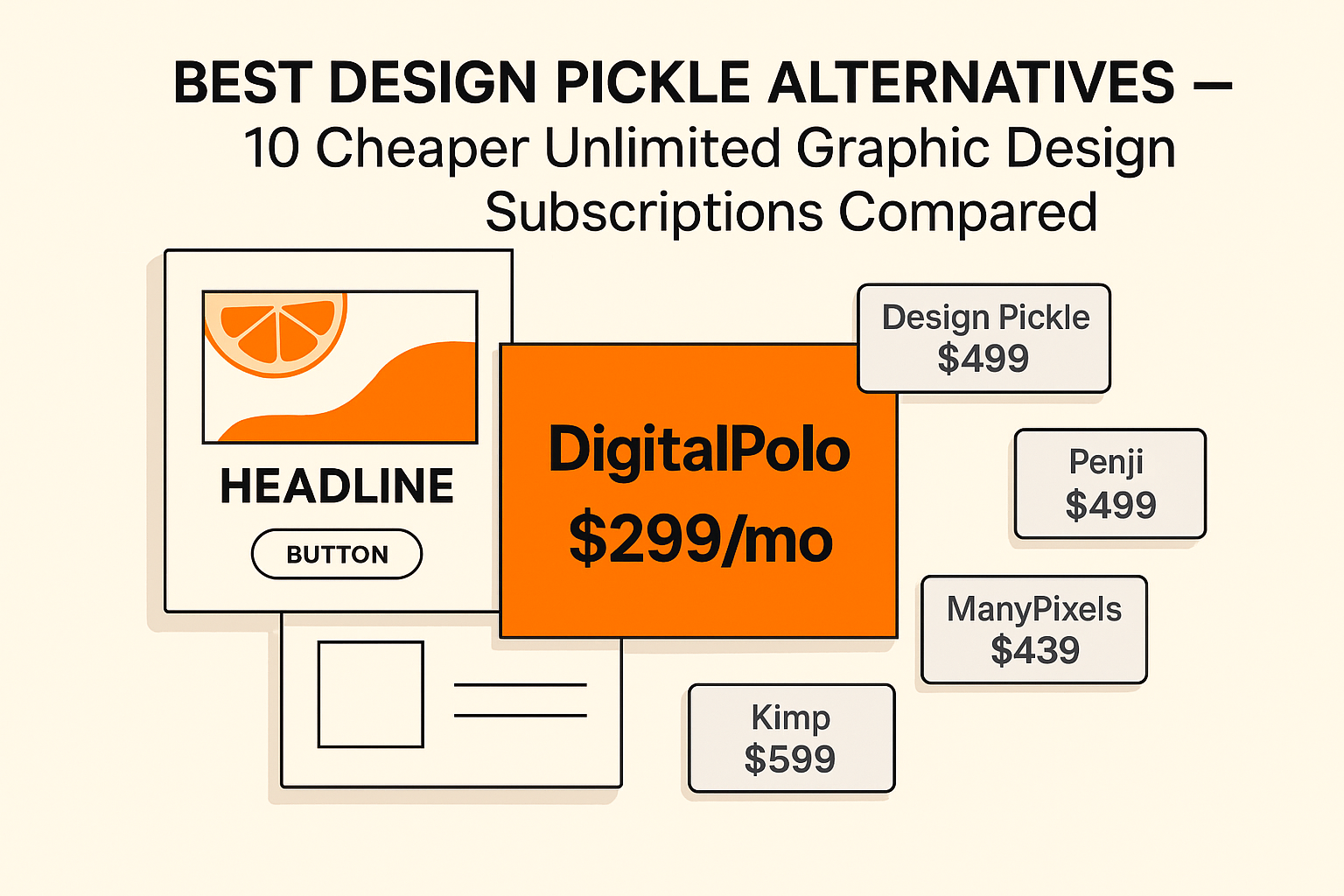
The fastest-growing category. You pay a flat monthly fee and submit unlimited requests, delivered within a 24–48 hour SLA. Providers include Digital Polo, Design Pickle, Penji, ManyPixels and Kimp.
This model fits the way most businesses actually consume design — a steady stream of logos, social posts, ads, print and web rather than one giant project. Digital Polo is the longest-operating option in this group (founded in 2010), with a Partner plan at $399/month covering every discipline, 48-hour turnaround, unlimited revisions and source files included. Because there's no per-project quote, the cost is predictable no matter how much you send.
Best for: small businesses, agencies and teams with ongoing, varied design needs. Watch for: weak file specs (some providers don't deliver print-ready CMYK/vector by default) and one-at-a-time queues on entry plans.
See the full breakdown for SMBs in our guide to the best unlimited graphic design services for small business.
3. Boutique and specialist studios
Small studios that go deep on one thing — packaging, motion, editorial or a specific industry. When your project lives or dies on one specialism, a boutique studio often beats a generalist agency on craft, at a lower price.
Best for: a single, craft-heavy project in a defined niche. Watch for: limited capacity and a narrow range outside their specialism.
4. Freelance marketplaces
Fiverr, Upwork and 99designs give you access to thousands of individual designers at the lowest entry price. Quality is variable and you manage the brief, the revisions and the risk.
Best for: throwaway, experimental or very low-budget one-off assets. Watch for: inconsistent quality, rights/source-file gaps, and the hidden time cost of managing it yourself.
Which graphic design company should you choose?
- One-off, big-budget brand launch → a full-service agency.
- Ongoing design across many formats → an unlimited subscription like Digital Polo.
- One deep, craft-heavy specialism → a boutique studio.
- A single cheap, low-stakes asset → a freelance marketplace.
If your situation is "we need good design regularly and don't want to manage freelancers or pay agency minimums," the unlimited subscription model is almost always the best value — and you can compare it against hiring a freelancer or see exactly what graphic design costs before you decide.
The best graphic design company isn't the most famous one — it's the one whose model matches how you actually buy design. Match the six criteria above to your real needs and the shortlist gets obvious fast.
