
Category

Branding & Identity

Logo design, brand history, corporate identity kits, and visual identity systems.

Overhead view of a planning desk with a blank ninety-day wall calendar grid, stacked plain cards in warm neutral tones, a pencil and a coffee cup arranged on a cream surface

The 90-Day Brand Rollout After a Funding Round: The Plan, the Asset Count, and What It Actually Costs

A funding round does not create a branding project. It creates a distribution problem — the number of surfaces carrying your brand multiplies faster than you can produce for them, on a clock set by the board, the hiring plan and the announcement date. This is the operating plan: the asset register nobody builds, the three-tier triage, the 90-day sequence with owners, the budget split between creative and rollout, the hiring collision that wrecks the timeline, and the eight ways it breaks.

Overhead view of a blank employer brand welcome kit — unbranded folder, notebook, lanyard and badge holder, tote bag and card sleeve laid out in a grid on a warm neutral surface

The Employer Brand Asset Kit for Hiring at Volume

The complete production inventory of employer branding assets — what a company hiring at volume actually has to produce, in what specs, how the demand scales with headcount, the template system that stops it becoming 400 bespoke jobs, what it costs three different ways, and the licensing traps in employee photography and fonts.

Color theory for brand design — color wheel, four classic schemes, and how brand designers pick palettes

Color Theory for Brand Design: The Complete 2026 Guide

Color theory is the systematic study of how colors interact, combine, and influence perception. This 2026 guide breaks down the color wheel, the four classic color schemes (complementary, analogous, triadic, split-complementary), and how brand designers actually pick palettes that work.

7 Guidelines For Minimalist Branding

7 Guidelines For Minimalist Branding

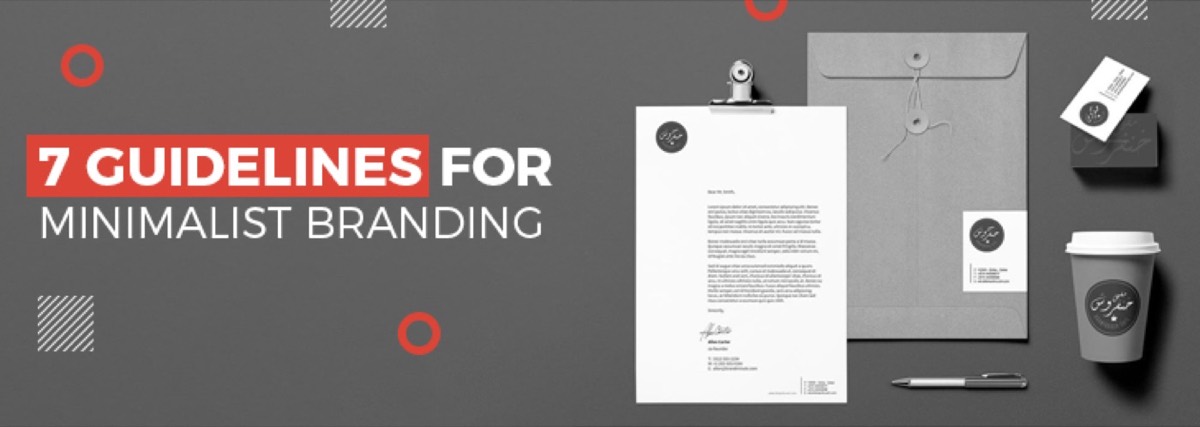
Minimalist branding uses fewer visual elements to communicate more. These 7 guidelines cover simplicity, negative space, color, typography, and brand consistency—with real examples from Apple, Nike, and Airbnb.

The Complete Guide to Ecommerce Branding Strategy

The Complete Guide to Ecommerce Branding Strategy

A strong ecommerce branding strategy is what separates stores that compete on price from brands that command loyalty. This guide covers the 6 core brand elements, real examples from DTC brands, and a step-by-step approach to building an ecommerce brand identity that lasts.

How to Use Nostalgia in Branding and Design

How to Use Nostalgia in Your Branding and Design

Nostalgia marketing is one of the most effective emotional triggers in branding — but only when done correctly. This guide covers the psychology behind nostalgic branding, real brand examples, statistics on its effectiveness, and how to incorporate retro design elements without looking dated.

The Ultimate Guide to Personal Branding

The Ultimate Guide to Personal Branding

Personal branding is how you control your professional reputation — what people find when they search your name, what they remember after a conversation. This guide covers the 7 pillars, the 5 C's, and a practical step-by-step process for building a personal brand that opens doors.

Why Branding Matters More Than Ever for Manufacturers

Why Branding Matters More Than Ever for Manufacturers

Manufacturing and industrial brands have historically underinvested in branding — and it shows. This guide covers why manufacturer branding is a competitive differentiator, with case studies from Caterpillar, 3M, and Honeywell, and a framework for building brand equity in B2B markets.

The Olympics: Branding Through the Ages

The Olympics: Branding Through the Ages

Each Olympic Games creates a new brand identity — logo, slogan, mascot, and visual system — that reflects the host nation and the era. This guide covers the branding of five Summer Olympics from Beijing 2008 to Paris 2024, and the lasting lessons each one offers for brand designers.

5 Reasons to Use a Brand Mascot Alongside Your Logo

5 Reasons to Use a Brand Mascot Alongside Your Logo

Brand mascots do something logos alone cannot: they create emotional connection, make abstract brand values concrete, and drive product recall through personality. This guide covers five reasons companies from AFLAC to Kellogg's have used mascots to build some of the world's most recognizable brands.