Every four years, the ICC Cricket World Cup presents a global design challenge: create a visual identity that represents both the host nation's culture and the universal spirit of the sport, at a scale of billions of impressions.
The logos created for each edition are more than decoration. They appear on team kits, broadcast graphics, stadium signage, merchandise, and marketing materials across dozens of countries. They're studied by designers and remembered by fans long after the tournament ends.
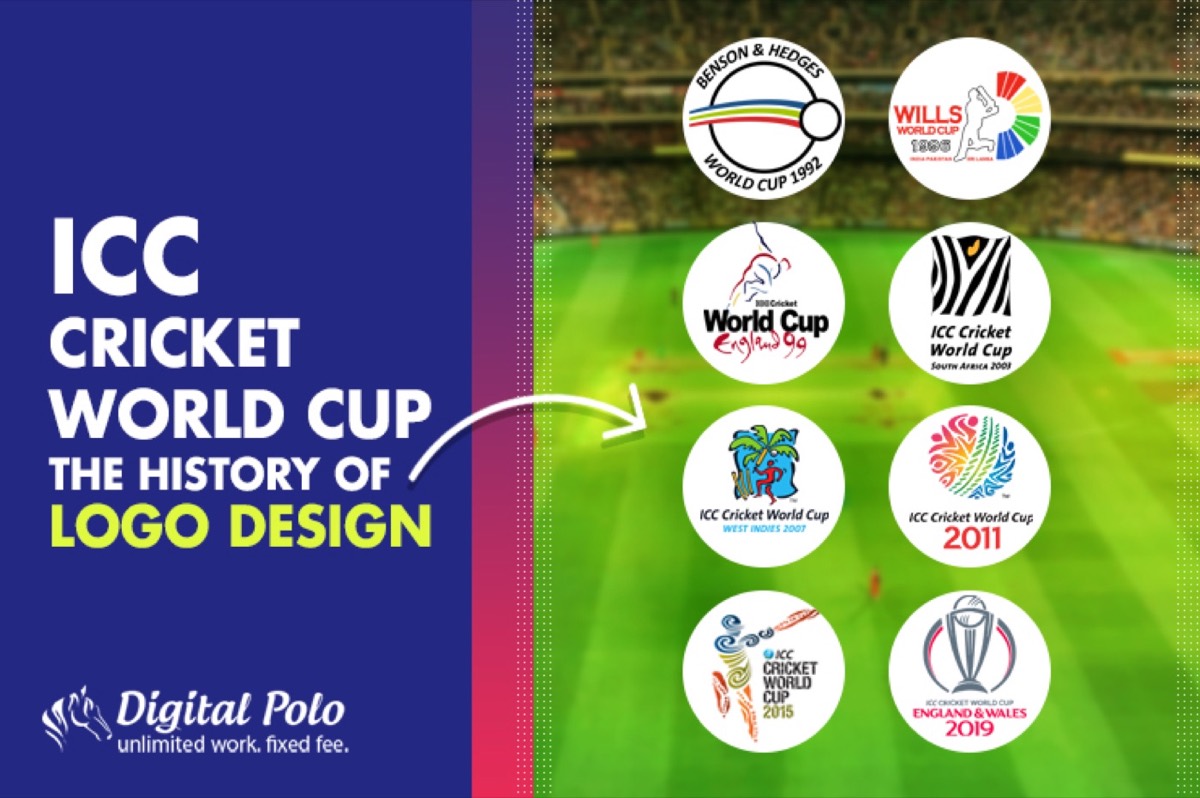
Here's a look at how ICC World Cup logo design evolved from 1992 to 2019 — what worked, what didn't, and what each edition reveals about design thinking at its moment in time.
The Evolution of ICC Cricket World Cup Logos
Before 1992, World Cup tournaments didn't have dedicated logos in the modern sense. The introduction of colored uniforms in 1992 marked a broader professionalization of cricket's commercial identity — and with it, the beginning of deliberate tournament branding.
Each subsequent edition has reflected both the host nation's visual culture and the dominant design sensibilities of its era. For another study in how major sporting events approach visual identity over time, the Olympics' branding evolution through the ages offers a fascinating parallel history.
1992 – Benson & Hedges World Cup (Australia and New Zealand)
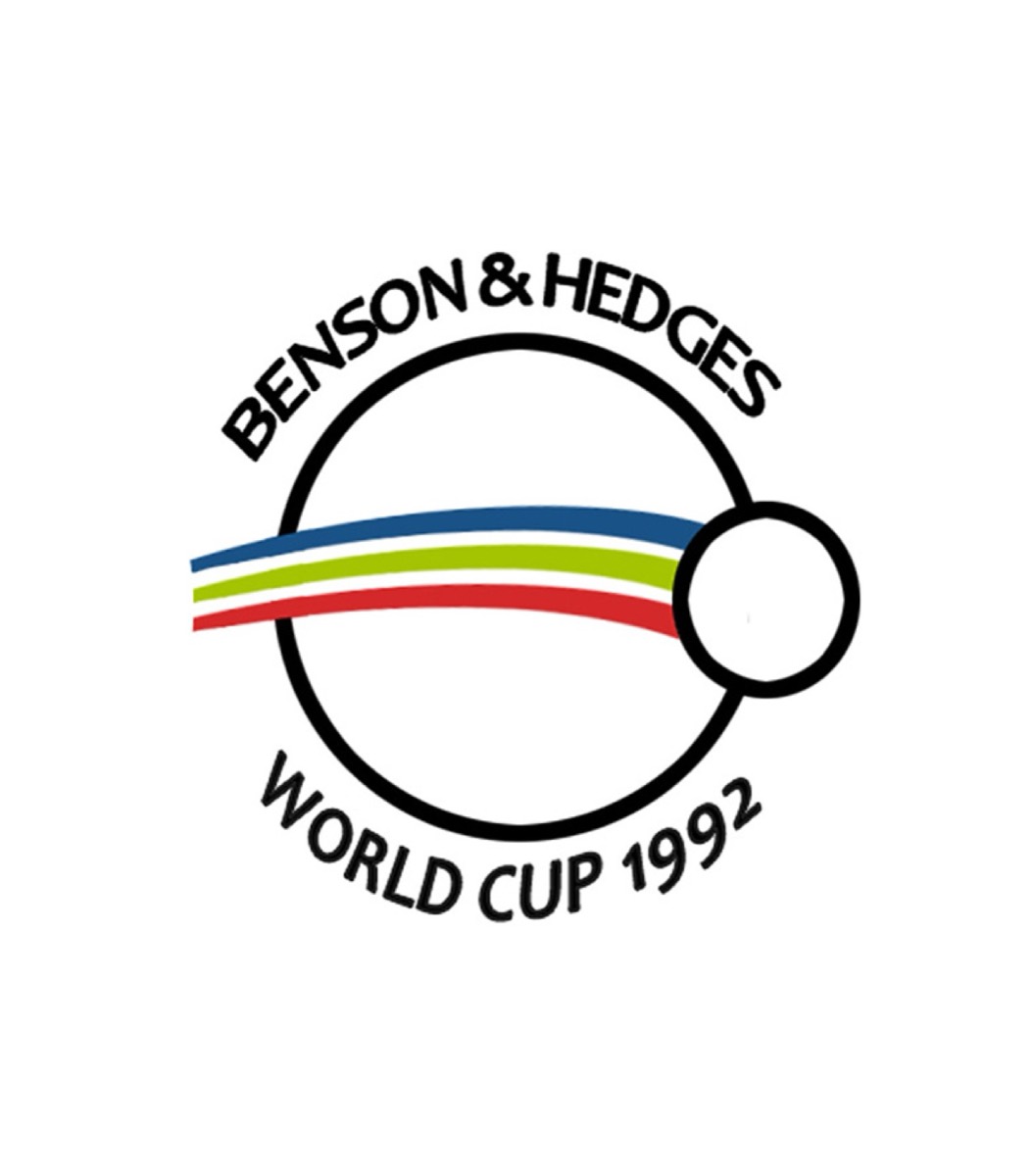
The 1992 logo is notable for its simplicity. With no social media to distribute it and television still the dominant viewing platform, the designers prioritized legibility on screen — a logo that would read clearly on a jersey and in broadcast graphics.
The result has a tropical character that speaks to the Oceanian hosts — Australia and New Zealand. What makes it work is precisely that constraint-driven simplicity. Placed on jerseys, it looked clean and professional in a way that more complex designs couldn't have managed. Its restraint has aged well.
1996 – Wills World Cup (India, Sri Lanka, and Pakistan)

The 1996 logo represents a significant step backward in design quality. Co-hosted by India, Sri Lanka, and Pakistan, the Wills World Cup logo appears rushed — asymmetrical cutouts, an underdeveloped composition, and a design that communicates very little beyond the fact that cricket is involved (signaled primarily by the batsman figure).
From a professional design perspective, the logo lacks the structural principles that make marks scalable and memorable. It's a useful reminder that tournament branding requires the same rigor as any major brand identity — improvised execution at a global platform creates a lasting negative impression.
1999 – ICC World Cup (England)
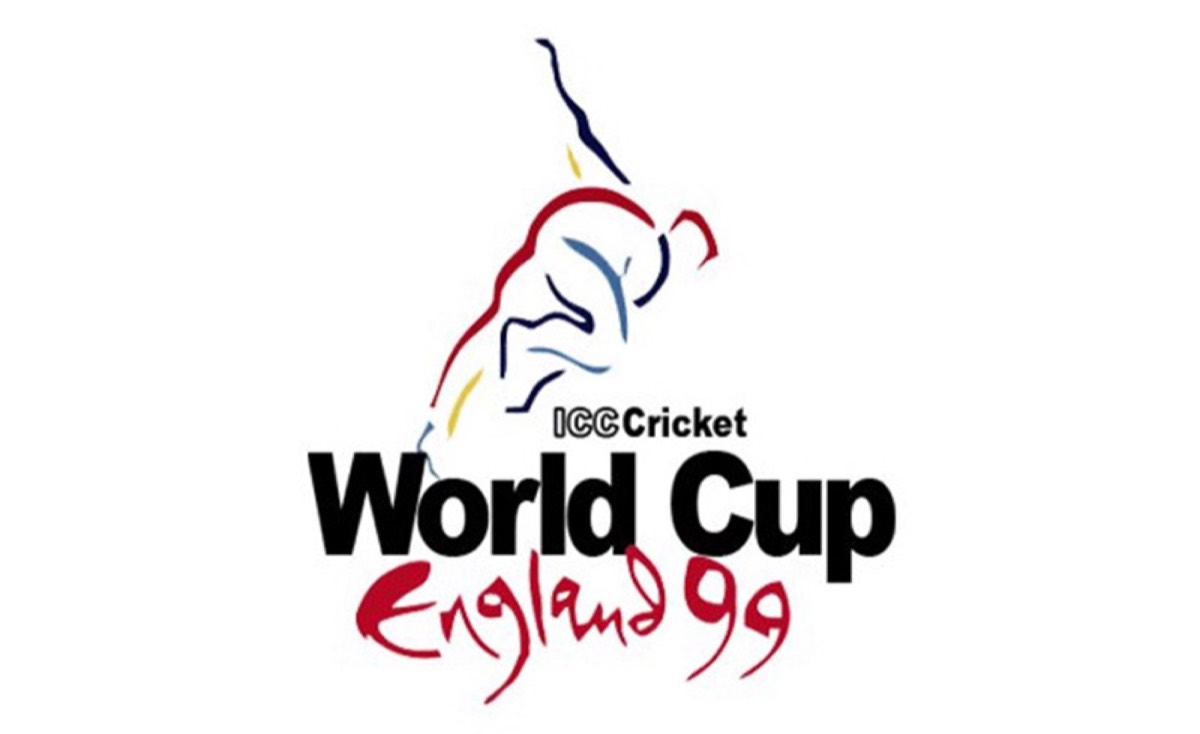
The 1999 edition marked the first time the ICC appeared explicitly in the tournament logo — a deliberate branding decision that aligned the World Cup with the governing body's global positioning.
The logo features a bowler in dynamic action, drawn from the lanky figure of Indian bowler Debashish Mohanty. This was itself a conceptual statement: cricket had long been considered a batsman's game, and placing a bowler at the center of the tournament's visual identity acknowledged the evolving value placed on pace bowling.
The color scheme is deliberately multi-national — each color representing the participating countries. The design achieves simplicity with elegance, a balance the 1996 version failed to find.
2003 – ICC World Cup (South Africa, Zimbabwe, and Kenya)
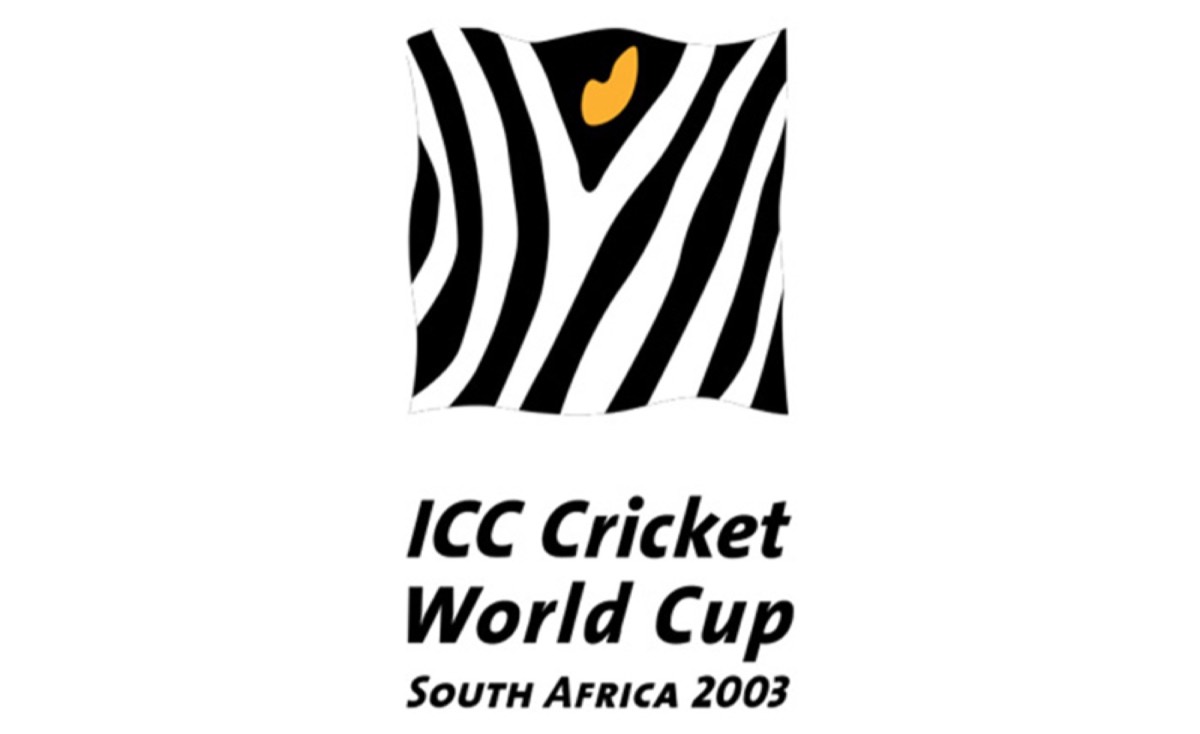
Co-hosted across three African nations, the 2003 logo leans into the continent's most iconic visual language: the zebra stripe. A patch of zebra print anchors the design, with a yellow eye at its center and minimal typography in black on white.
This is strong cultural communication executed simply. You don't need to read the text to know this tournament is taking place in Africa. The logo works because it commits to a singular idea rather than trying to represent everything.
2007 – ICC World Cup (West Indies)
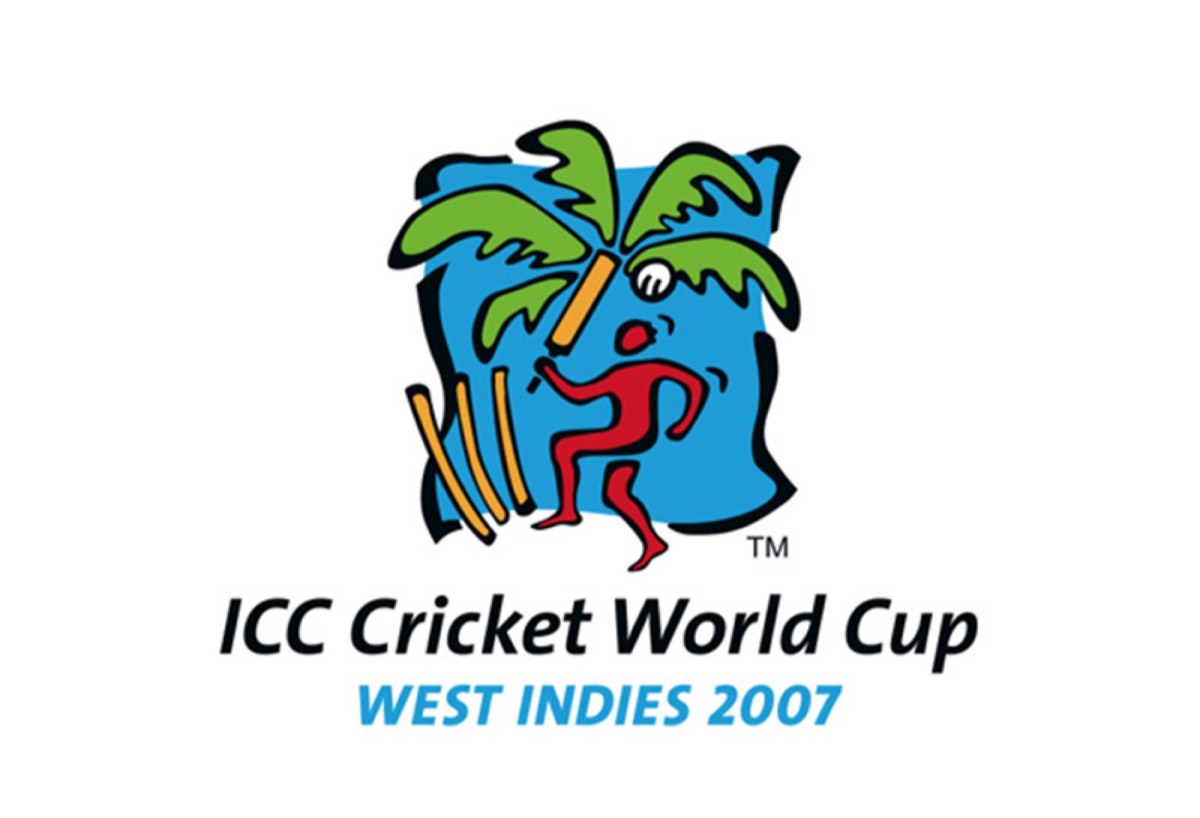
The West Indies logo is the most personality-driven of the series. A cricketer hitting a ball stands in front of a coconut tree, surrounded by the vivid blues, reds, yellows, and greens of the Caribbean palette. It's unmistakably Caribbean — festive, colorful, and expressive.
What distinguishes it from earlier designs is the commitment to atmosphere. The logo doesn't just identify the tournament; it communicates what it would feel like to be there. That emotional quality makes it one of the most memorable World Cup marks.
Need a brand identity that communicates your culture clearly and memorably? See Digital Polo's plans →
2011 – ICC World Cup (India, Sri Lanka, and Bangladesh)
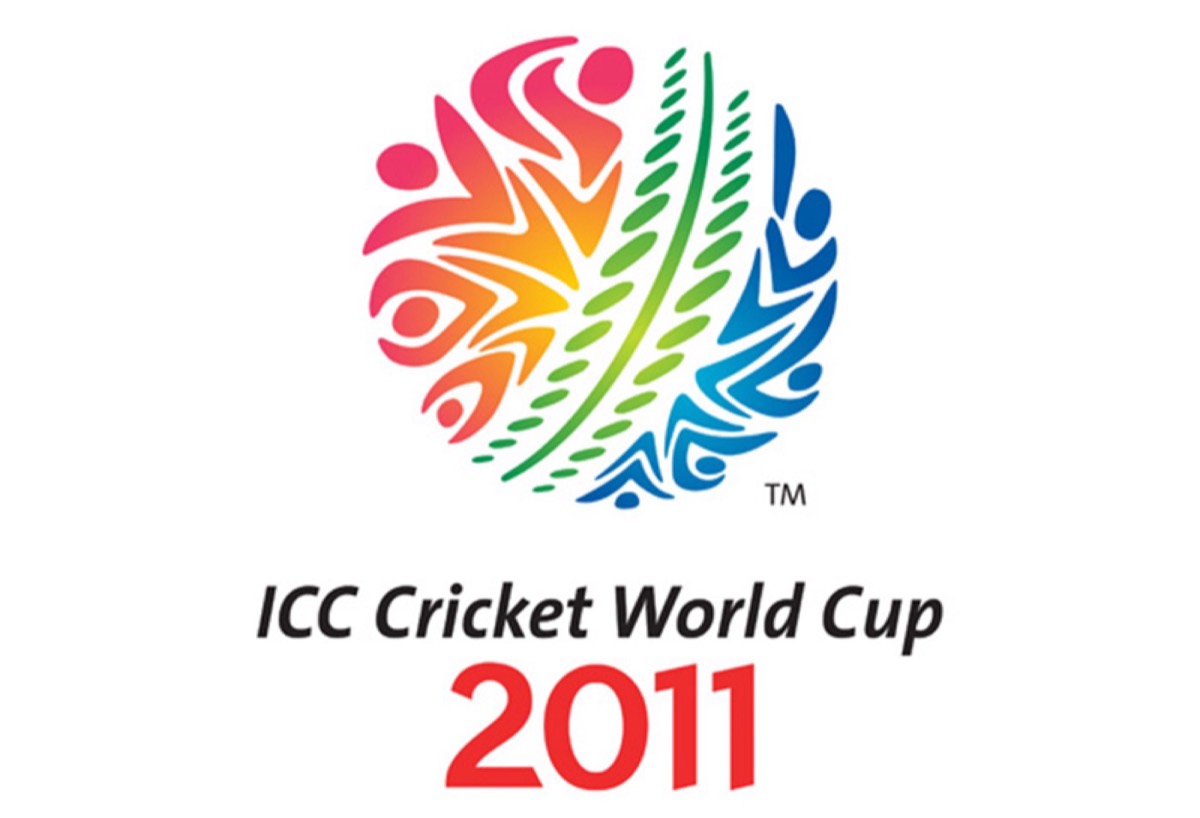
On first glance, the 2011 logo appears to be simply a colorful cricket ball. Look closer and the design reveals cricketers formed within the ball's surface — a detailed technique executed by Australian design company Witekite.
The gradient coloring gives the ball depth and visual richness. As a design challenge, packaging a stadium's worth of players into a sphere while making it immediately readable as a cricket ball is impressive work. The hidden detail rewards closer inspection without disrupting the overall form.
2015 – ICC World Cup (Australia and New Zealand)
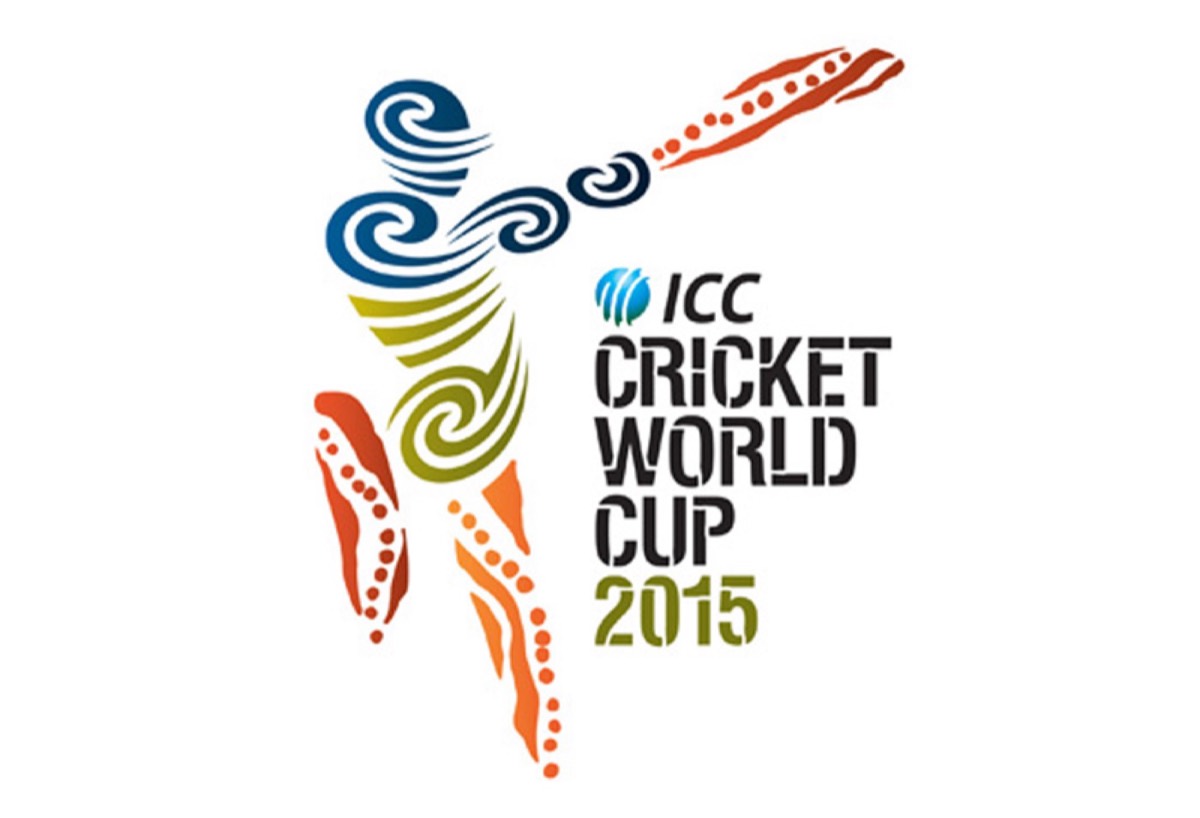
Returning to Australia and New Zealand 23 years after 1992, the 2015 logo evolved the approach from tropical simplicity to indigenous cultural representation. Where the 1992 mark communicated the Oceanian setting through environmental character, the 2015 design incorporated motifs from Maori culture (New Zealand) and Aboriginal art (Australia).
A batsman playing a powerful stroke is rendered in a style that weaves in these indigenous design traditions. The result honors both host nations' cultural heritage rather than defaulting to a generic international sports aesthetic.
2019 – ICC World Cup (England and Wales)
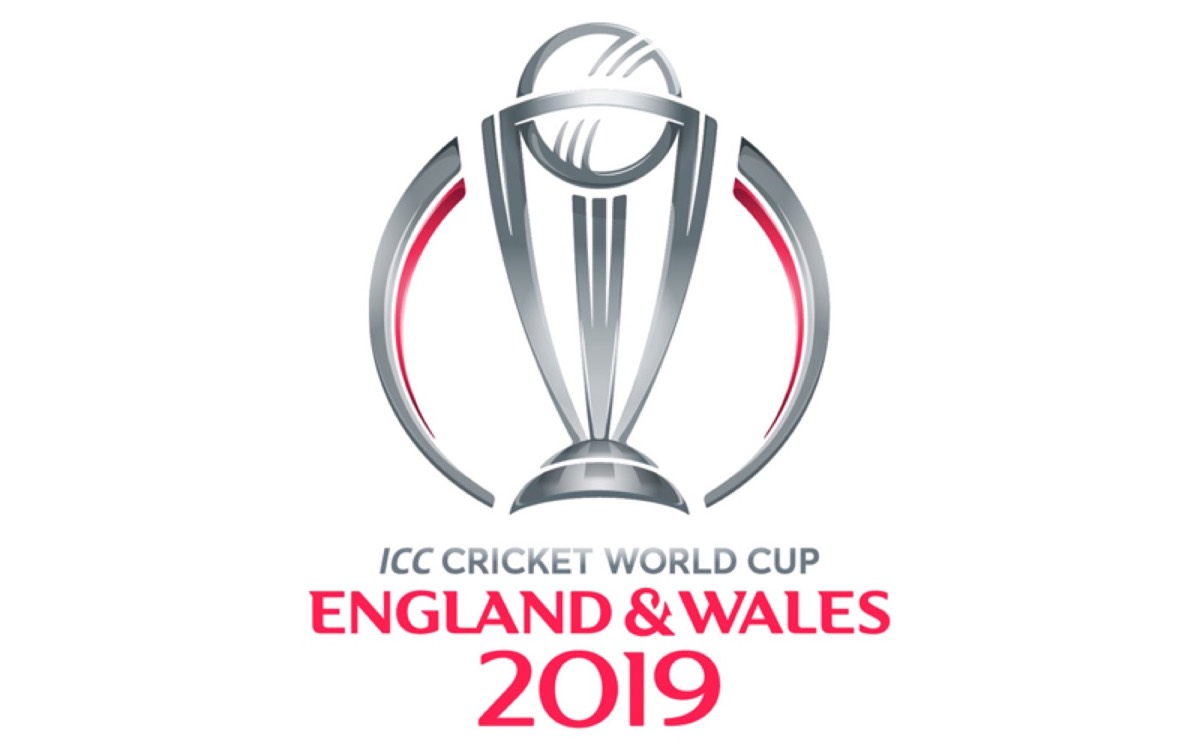
The 2019 logo marks the most significant aesthetic departure from the tournament's design history. Previous editions were largely illustrative — drawing from cricket imagery, host nation culture, and vibrant color palettes. The 2019 mark strips all of that away.
A winner's cup with a ball balanced on top sits within a globe outline, rendered in grey and red. It is minimal, modern, and distinctly English in its restraint. England's design culture has historically favored understatement and precision over exuberance. This logo is that sensibility applied to tournament branding.
The result is more corporate than festive, more mark than celebration — but it scales well, works in mono, and communicates unambiguously: a global competition, a winner's prize, a sport with a ball.
What Cricket World Cup Logos Teach Designers
Eight editions of World Cup branding reveal consistent lessons that apply well beyond sports design:
Cultural specificity is more memorable than generic universality. The logos that endure — West Indies 2007, Africa 2003, Australia/NZ 2015 — are the ones that fully committed to representing their host culture visually. Generic international design language produces forgettable marks. The same principle applies to commercial logos — understanding how logo color schemes inspire branding shows how deliberate color choices make a brand identity feel specific and owned rather than generic.
Simplicity at scale is a strategic requirement. Logos that appear on jerseys, broadcast graphics, digital assets, and 100,000-capacity stadium screens must work in every context. Complex designs fail at small sizes, in mono, and at a distance.
Design reflects the era. Each World Cup logo is a time capsule of the dominant design sensibility at the moment of its creation. The 1992 mark could only have come from 1992. The 2019 mark reflects a decade of minimalism's dominance in branding. Reading this trend across editions is a useful exercise for any designer.
Conclusion
The ICC Cricket World Cup logo series is a surprisingly rich case study in how brand identity balances cultural representation, practical constraints, and evolving design values. Not every edition succeeded — the 1996 mark remains a cautionary example. But taken as a whole, the series demonstrates how thoughtful design can make a global sporting event feel genuinely rooted in a time and place.
For any brand designing around a specific cultural identity or major event, the pattern is clear: commit to genuine cultural specificity, apply design rigor, and let the identity reflect something true about who you are and where you're from.
Digital Polo creates professional brand identities that reflect genuine cultural values and communicate effectively across every context. Start for $399/mo → | Soulmate at $899/mo →
Frequently Asked Questions About Sports Logo and Event Branding Design
How are ICC Cricket World Cup logos designed? Each ICC World Cup organizing committee works with design agencies or teams to develop the tournament's visual identity, subject to ICC brand guidelines and approval. The process typically involves research into the host nation's cultural identity, visual heritage, and the contemporary design landscape, followed by concept development, client review, and refinement. Each host city's committee leads identity development, reflecting local culture.
What makes a sports event logo successful? Effective sports event logos share several qualities: clear scalability (they work at all sizes, from jersey badges to stadium banners), cultural authenticity (they represent the host's identity genuinely, not generically), distinctive visual character (they're instantly recognizable and hard to confuse with other tournaments), and durability (they age well rather than feeling tied to a specific design trend).
Why do some sports logos get criticized? Sports logos attract criticism when they feel culturally generic, visually confusing, or disconnected from the event's context — or when technical problems arise (like not scaling correctly). The 1996 Cricket World Cup logo was criticized for appearing rushed and asymmetrical. At the scale of global sports events, every design decision is public and scrutinized — ambiguities that would be unremarkable in commercial design become public debates.
How can brands learn from event branding design? The key lesson is that visual identity works best when it reflects something genuine about the organization's values, culture, or position — not just what looks current or appealing. Brands that try to look like everyone else in their category lose recognition benefits. Brands that commit to a specific, authentic visual language — as the best World Cup logos did — build recognition that compounds over time.
What role does color play in sports branding? Color is one of the most powerful tools in sports branding — it creates immediate emotional responses, communicates cultural associations, and enables instant recognition. The West Indies 2007 logo's vivid Caribbean palette communicated festivity and atmosphere. The Africa 2003 logo's black-and-white zebra print communicated place without words. Color choices should be driven by what you genuinely want to communicate, not by current trends.