Nostalgia is one of the most powerful emotional levers in marketing — and one of the most frequently misused.
When brands get it right, nostalgia creates an immediate emotional bond between audience and brand, bypasses rational skepticism, and produces the kind of warm brand affinity that advertising alone can't buy. When they get it wrong, the result is tone-deaf throwback content that reads as a brand out of touch with its present rather than in touch with its customers' past.
The difference between the two outcomes lies in understanding what nostalgia actually is — and what it requires of brands that want to use it.
The Psychology of Nostalgic Branding
Nostalgia describes a longing for a time or place associated with happy memories. The word derives from the Greek "nostos" (homecoming) and "algos" (pain) — a homesickness for a past that can't be revisited. Despite its roots in loss, the emotional experience of nostalgia is primarily positive: it triggers warmth, connection, continuity, and meaning.
Research published in the Journal of Consumer Research found that nostalgia increases a consumer's sense of social connectedness — and connected consumers are more generous, more trusting, and more likely to spend. A 2023 Nielsen study found that nostalgia-based campaigns generate 16% higher emotional resonance than non-nostalgic creative across age demographics.
The most important insight for brands: nostalgia works best as a bridge to the future, not a retreat to the past. The most effective nostalgic campaigns use the best parts of the past to generate excitement about what's ahead — not as a signal that the brand has stopped evolving. Working with a design agency to advance your branding ambitions helps you execute nostalgic campaigns with the production quality they require to land effectively.
The Key Principle: Bridge, Not Railway
Apple's "Start-Up" campaign is the clearest example of this principle in practice.

The film opens with a young music producer connecting a vintage iMac G3 — a product that defined Apple's design aesthetic in the late 1990s — to record Apple's recognizable startup sound. New products quickly join the composition, building an audio collage that spans 45 years of Apple design. The message is not "remember how great the old Apple was" — it's "the same spirit that created those beloved products is still creating the ones you'll love next."
This is nostalgic branding done correctly: the past is invoked not to rest on it but to build from it.
Pizza Hut's "Newstalgia" campaign offers a useful contrast. Limited-edition boxes printed with Pac-Man arcade cabinet artwork, with an AR feature letting users play the game on their phone — a clever execution that evoked childhood memories of playing arcade games in Pizza Hut restaurants. But it offered no bridge to the present: it was pure throwback, without a reason to feel connected to Pizza Hut in the future. Engaging in the moment, but brand-building limited.
Nostalgia Marketing by the Numbers
The effectiveness of nostalgic branding is well-documented:
- 88% of consumers report that nostalgic advertising makes them feel emotionally connected to a brand (Nielsen, 2023)
- Nostalgia-based campaigns generate 16% higher purchase intent on average compared to non-nostalgic equivalents
- 79% of millennials and Gen Z consumers report that brands that evoke nostalgia feel more authentic and trustworthy
- The global retro and vintage-inspired market has grown at over 7% annually since 2018
The demographic breadth of nostalgia's appeal is one of its key advantages. Unlike trend-based marketing that resonates only with early adopters, nostalgia operates across age groups — though the specific reference points that trigger it vary by generation. Smart branding strategies that supercharge marketing can make nostalgia work harder as part of a broader brand growth plan.
How Brands Use Nostalgia in Digital Design
Facebook's "On This Day" feature resurrects posts, photos, and status updates from previous years for each user. The feature had immediate viral uptake — millions of users republished their memories, generating organic content and emotional engagement that paid campaigns couldn't have produced.
Spotify Wrapped repackages the year's listening history into a colorful, shareable visual report. It's nostalgia at a compressed timescale — the year's musical journey presented as a personal artifact. The annual ritual has become one of Spotify's most effective retention and organic marketing tools.

Instagram's #ThrowbackThursday became a cultural phenomenon with over 54 million tagged posts, driven entirely by users' own nostalgic impulse. The platform provided the hashtag; users generated the content.
Beyond digital platforms, the 1980s and 1990s aesthetic revival has proven commercially powerful across fashion, gaming, music, and packaging design. Retro-themed products consistently outperform their category averages in consumer perception testing.

How to Incorporate Retro Style in Your Brand Design
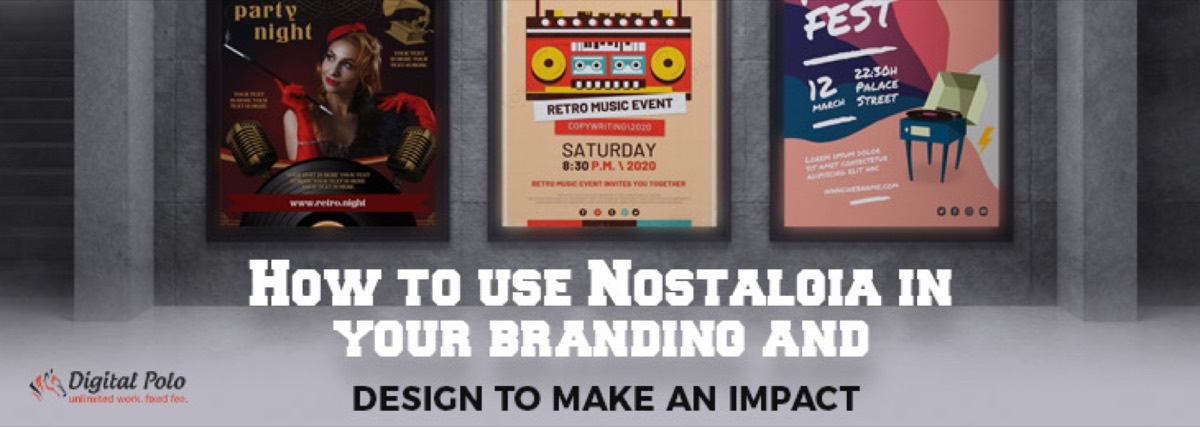
Recreate emotional reference points, not just visual styles. Retro typography and sepia filters are surface-level executions. What creates genuine nostalgic connection is evoking the emotional state associated with a past era — safety, simplicity, playfulness, adventure — through design that resonates with your specific audience's memories. Know which era your target audience relates to, and design to its emotional register, not just its visual clichés.
Leverage "simpler times" positioning. Many consumers associate the past with greater simplicity and authenticity. Brands that evoke this feeling through design — natural materials, hand-drawn illustrations, analog textures — create a sense of genuineness that hyper-digital aesthetics can't match. This is particularly effective for food, beverage, wellness, and artisan product brands.
Use before-and-now contrasts. Juxtaposing past and present states — of the brand, the product, or the customer — creates an emotionally resonant narrative arc. A brand that shows its original 1970s logo alongside its current identity, or shows how a product has evolved over decades, communicates longevity and earned authority.
Match the era to the audience. Gen X responds to 1980s visual language. Millennials respond to 1990s and early 2000s aesthetics. Gen Z has developed nostalgic attachment to early-internet and Y2K visual styles. The era you invoke must be one your target demographic has a genuine emotional connection to — not the era you find interesting or the one your founders remember.
When Nostalgic Branding Doesn't Work
Nostalgia fails when:
- The reference is wrong for the audience — invoking an era your target customer is too young or too old to remember
- The nostalgia is the entire campaign — with no bridge to the brand's present relevance or future promise
- The execution is generic — sepia filters and pixel art applied without connection to the brand's specific history or the audience's specific memories
- The brand's history doesn't support it — a two-year-old startup can't credibly leverage nostalgia; the emotional resonance comes from genuine longevity
The brands that use nostalgia most effectively — Nintendo, Coca-Cola, Kodak, Levi's — have decades of genuine history with their audiences, and they invoke that history to strengthen a present relationship, not to avoid talking about the present.
Conclusion
Nostalgia is not a creative shortcut — it's an emotional insight. Used with precision, it creates brand connections that advertising spend alone cannot generate. Used lazily, it signals a brand disconnected from both its past and its present.
The test for any nostalgic brand campaign: does it create warmth about where the brand has been while building anticipation for where it's going? If the answer is yes, the nostalgia is doing real work. If the answer is no, it's throwback content without brand equity.
The creative opportunity exists in the bridge — between the memories your audience carries and the brand they're choosing today.
Need brand design that connects emotionally with your audience? Digital Polo creates branding — identities, campaign assets, and visual systems — that resonate and convert. See plans → | Soulmate at $899/mo →
Frequently Asked Questions About Nostalgia Marketing
What is nostalgia marketing? Nostalgia marketing is the use of references to the past — visual aesthetics, cultural touchstones, product histories, or emotional memories — to create a warm, trusting emotional connection between a brand and its audience. It works because nostalgic experiences trigger positive emotional states (warmth, safety, belonging) and bypass the rational skepticism that most direct brand messaging faces.
Why is nostalgia effective in advertising? Nostalgia triggers the brain's reward circuitry and creates a sense of social and emotional connection. Nielsen research shows nostalgia-based campaigns generate 16% higher emotional resonance than non-nostalgic equivalents. Nostalgic consumers report feeling more trusting of and connected to brands that invoke genuine shared memories — and that trust translates directly into purchase intent and brand loyalty.
Which brands use nostalgia marketing most effectively? Apple (Start-Up campaign), Coca-Cola (ongoing heritage campaigns), Nintendo (mini console relaunches, retro game releases), Levi's (501 heritage campaigns), and Pizza Hut (Newstalgia packaging). In digital products, Spotify Wrapped and Facebook's On This Day are successful implementations of nostalgia at scale. All effective examples share one characteristic: they use the past as a bridge to the present rather than a destination in itself.
How do I incorporate nostalgia into brand design? Identify the specific era your target demographic has genuine emotional memories of, then design to that era's emotional register (not just its visual clichés). Use period-appropriate typography, color palettes, or illustration styles as starting points. Combine nostalgic visual elements with contemporary execution so the result feels like a tribute rather than a throwback. Always connect the nostalgic reference to your brand's present relevance.
What is retro branding? Retro branding uses vintage or period-specific visual styles — typography, color palettes, illustration techniques, graphic motifs from specific eras — to signal authenticity, craftsmanship, and heritage. It is related to but distinct from nostalgia marketing: retro branding can be applied to new brands as a visual aesthetic choice, while nostalgia marketing specifically leverages a target audience's genuine emotional memories of a past era.