A logo is rarely just one thing. The Apple logo is a graphic apple — but there's also a wordmark Apple uses in copyright lines. The Nike swoosh appears alone on shoes but with the wordmark in ads. The Burger King logo is a full combination mark with the burger-bun curve enclosing the type. Each of those is a different logo type with a specific name and specific use cases.
This is the 2026 guide. What a logo mark actually is, and how it sits inside the family of logomarks, logotypes, wordmarks, lettermarks, combination marks and emblems.
Quick answer: A logo mark (or logomark) is the graphic symbol part of a logo — the picture, icon, or abstract shape that represents the brand. A logotype is the brand name set as designed text. A wordmark is a logo that is only text. A lettermark uses initials. A combination mark uses both a logomark and a wordmark together. An emblem integrates the text inside a contained badge or shape. Apple's apple = logomark. Coca-Cola's script = wordmark. IBM's initials = lettermark. Burger King's bun + name = combination mark. Starbucks' siren-in-a-circle = emblem.
The Six Logo Types
1. Logomark (Brand Mark / Pictorial Mark)
The graphic symbol portion of a logo. Picture, icon, abstract shape. Stands alone without the brand name beside it.
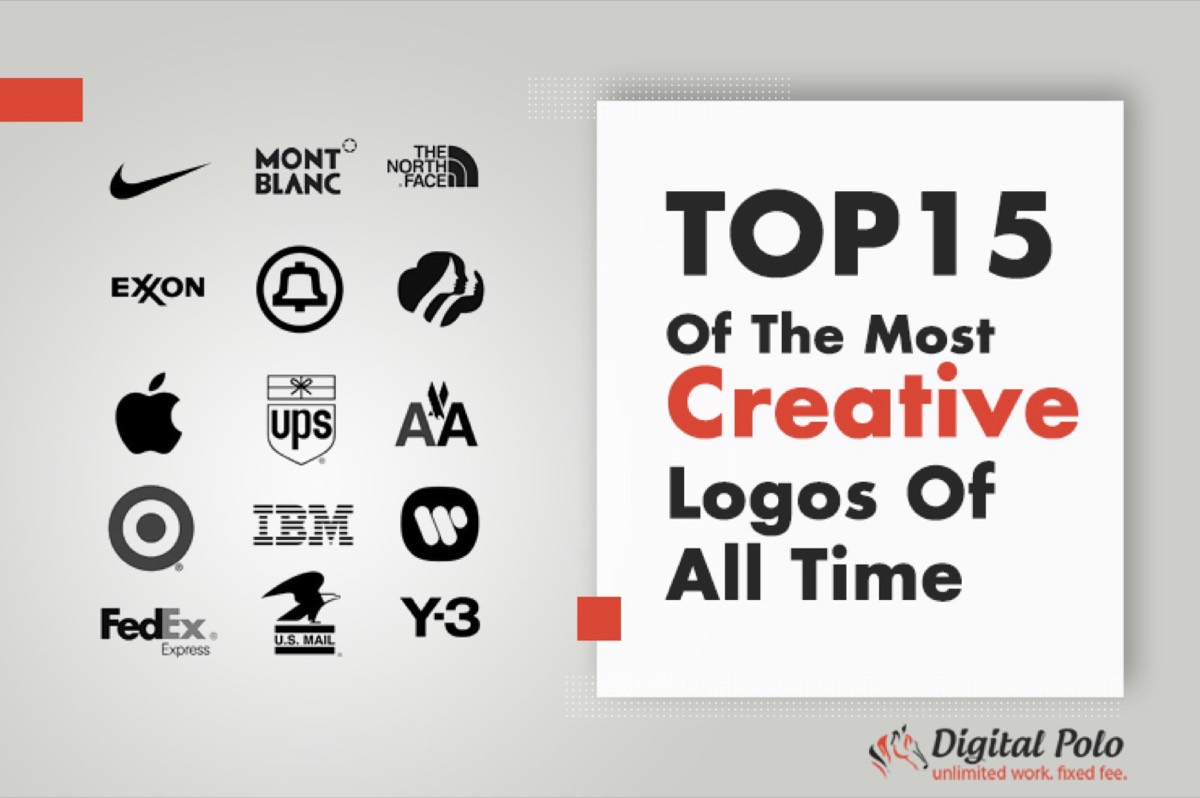
Examples: Apple (apple silhouette), Nike (swoosh), Twitter/X (bird → stylised X), Target (bullseye), Shell (shell silhouette), McDonald's (golden arches).
When to use: When the brand has the recognition to stand on the symbol alone, or when the symbol is so distinctive that it teaches itself quickly. New brands rarely launch with logomark-only — the symbol-to-name association has to be earned through consistent use.
2. Logotype
The brand name set as designed type. Distinct from a wordmark in nuance: a logotype is a brand name typographically crafted (often with custom letterforms), while a wordmark is a brand name set in a (possibly modified) typeface. The terms get used interchangeably.
Examples: Coca-Cola (Spencerian script), Disney (custom Walt Disney-style script), Google (custom geometric sans).
3. Wordmark
A logo where the brand name is the logo. No separate icon.
Examples: FedEx, Google, Visa, Sony, IBM (also a lettermark — categories overlap), eBay, Pinterest, Subway.
The discipline in wordmark design is choosing or designing a typeface that carries enough personality to identify the brand without help from a symbol. Many famous wordmarks have a hidden trick — FedEx's negative-space arrow between the E and the X is the canonical example.
When to use: When the brand name is distinctive, short enough to read at small sizes, and the typography can do the personality work alone. Strongest for category-defining brands where the name itself is the equity.
4. Lettermark (Monogram)
Uses the brand's initials as the logo.
Examples: HBO, IBM, NASA, HP, CNN, Hublot, P&G, GE, BMW (also has a roundel logomark, but the letters BMW themselves are a lettermark).
When to use: When the full brand name is too long for legible small-size use, or when the initials carry strong recognition value. Most lettermarks are designed with custom letterforms — the standard typographic version of the initials is rarely strong enough on its own.
5. Combination Mark
Uses a logomark and a logotype/wordmark together as a single locked-up logo.
Examples: Adidas (three stripes + wordmark), Burger King (bun shape + name), Lacoste (crocodile + wordmark), Slack (hashtag mark + wordmark), Spotify (sound-wave mark + wordmark), Doritos (chip shape + wordmark).
When to use: When you want flexibility. The full combination mark works for primary placements (website hero, packaging front, business cards). The logomark works alone where the symbol is recognisable (app icons, favicons, social avatars). The wordmark works where you need to name the brand explicitly (legal copy, signage, third-party listings). Most growing brands start with a combination mark.
6. Emblem Logo
Text and symbol integrated into a single contained shape — circle, badge, shield, crest.
Examples: Starbucks (siren in green circle), Harley-Davidson (orange shield), BMW (roundel with letters), Burger King (the older crown version was an emblem; current version is a combination mark), most NFL/Premier League sports clubs, US college sports identities.
When to use: When the brand carries heritage, authority, official-organisation feel, or sporting context. The downside: emblems lose detail at small sizes because the text inside the badge becomes unreadable. Starbucks reduced the text from their emblem in 2011 specifically because it was breaking at small sizes — leaving the siren alone (now a logomark) for digital use.
Quick Comparison
| Type | What it is | Famous examples | Strongest for |
|---|---|---|---|
| Logomark | Graphic symbol alone | Apple, Nike, Twitter/X, Target | Brands with established recognition |
| Logotype / Wordmark | Brand name set as designed text | Coca-Cola, FedEx, Google, Visa | Brands with distinctive short names |
| Lettermark | Initials as logo | IBM, HBO, NASA, HP, CNN | Long names; strong initial recognition |
| Combination mark | Logomark + wordmark together | Adidas, Burger King, Lacoste, Slack | New brands building symbol recognition |
| Emblem | Text inside a contained shape | Starbucks, Harley-Davidson, BMW, NFL teams | Heritage, sporting, official-feel brands |
Which Logo Type Should Your Brand Use?
Three questions to answer:
- How recognised is the brand? Established brands can use a logomark alone. New brands need the wordmark beside the symbol to teach the association — start with a combination mark, earn the right to drop the wordmark.
- How long is the brand name? Long names favour lettermarks (initials) or combination marks where the symbol carries the recognition load. Short distinctive names favour wordmarks.
- Where will the logo appear? App icons and favicons need a logomark that works at 16 pixels. Vehicle wraps and signage need a logo that works at 4 feet. A combination mark with separate logomark and wordmark gives you both.
The strongest brand logo systems are usually combination marks designed with the components decoupled — the logomark and wordmark each work independently and they also work locked-up together. That gives the brand maximum flexibility across surfaces.
When You're Designing or Outsourcing a Logo
A proper logo design package should include:
- The full combination mark (logomark + wordmark locked up)
- The logomark alone, scalable to favicon size
- The wordmark alone, for places the symbol isn't recognisable enough
- A monochrome version (one-colour black, one-colour white) for places where colour reproduction is unreliable
- Vector source files (AI, EPS, SVG) so the logo can scale to any size
- Raster exports (PNG, JPG) at common pixel sizes for direct use
- Brand guidelines specifying minimum sizes, clear space, colour usage, and which version to use in which context
DigitalPolo's logo design service delivers all of the above as part of every logo design package — vector master files, raster exports, monochrome variants, brand guidelines, and the combination-mark + logomark + wordmark decoupling that lets the logo flex across every surface. See plans → | Read the logo selection guide →
Bottom Line
A logo mark is the graphic symbol part of a logo — the picture, icon, or abstract shape.
A logotype or wordmark is the brand name set as designed text.
A lettermark uses initials.
A combination mark uses both a logomark and a wordmark.
An emblem integrates text inside a contained badge.
Most growing brands should use a combination mark with decoupled components so the logomark can work alone on small surfaces, the wordmark can work alone when the symbol isn't recognised yet, and the full lock-up works on primary placements.
That is the full logo-types vocabulary.