If you thought postcards were a relic of the past, the numbers will make you reconsider. Postcard marketing is one of the most underrated tools in a direct marketer's arsenal — and the data consistently backs that up.
51% of postcards are read — a higher rate than almost any other form of direct mail. Compare that to standard articles or flyers, which achieve less than 30%. Even more compelling: of the 51% who read your postcard, roughly 20% are likely to respond. That is a conversion pipeline that very few digital channels can match at equivalent cost.
According to DMA data aggregated across finance, banking, retail, insurance, and consumer goods, cold telemarketing produces an 8.2% response rate. Direct mail is the only other channel that comes close. On average, direct mail generates a 3.7% response rate — beating social media, email, and display advertising, all of which hover around 0.1%.
Postcards specifically performed even better, achieving a 4.25% response rate. And successful campaigns did not rely on any single channel: the highest-performing strategies combined direct mail with email and social media for a cross-media effect that amplified all three.
Direct Mail Response Rate Trends
Direct mail response rates have staged a significant comeback. After years of declining use, response rates to house lists reached 5.3% and prospect lists hit 2.9% — the highest levels recorded since 2003. For comparison, the same metrics were 3.7% and 1.0% just the year before.
Industries making the heaviest use of direct mail include Financial Services at 71%, Consumer Packaged Goods at 63%, Retail at 55%, Travel and Hospitality at 55%, and Publishing and Media at 54%. These industries have tested every available marketing channel extensively — their continued investment in direct mail is not sentiment, it is data-driven.
In terms of ROI, direct mail ranks third overall. Email leads at 122%, followed by social media at 28%, direct mail at 27%, paid search at 25%, and online display at 18%. A 27% ROI channel that most competitors are ignoring is a significant competitive opportunity.
Why Millennials Respond to Postcard Marketing
One of the most counterintuitive findings in direct mail research is that younger consumers respond well to physical mail — sometimes better than older demographics.
- 36% of people under 30 look forward to checking the mail each day.
- 42% of millennials prefer direct mail political ads over online ads, with 38% favoring both equally.
- 66% are more likely to remember to use a voucher when they have a physical copy.
- 23% bought or ordered something as a result of receiving direct mail in the last 12 months.
- Millennials who live at home are 18% more likely than the general population to welcome direct mail and 32% more likely to find it memorable.
Physical mail stands out in an environment saturated with digital notifications. A well-designed postcard on someone's kitchen counter has staying power that a banner ad or email simply does not.
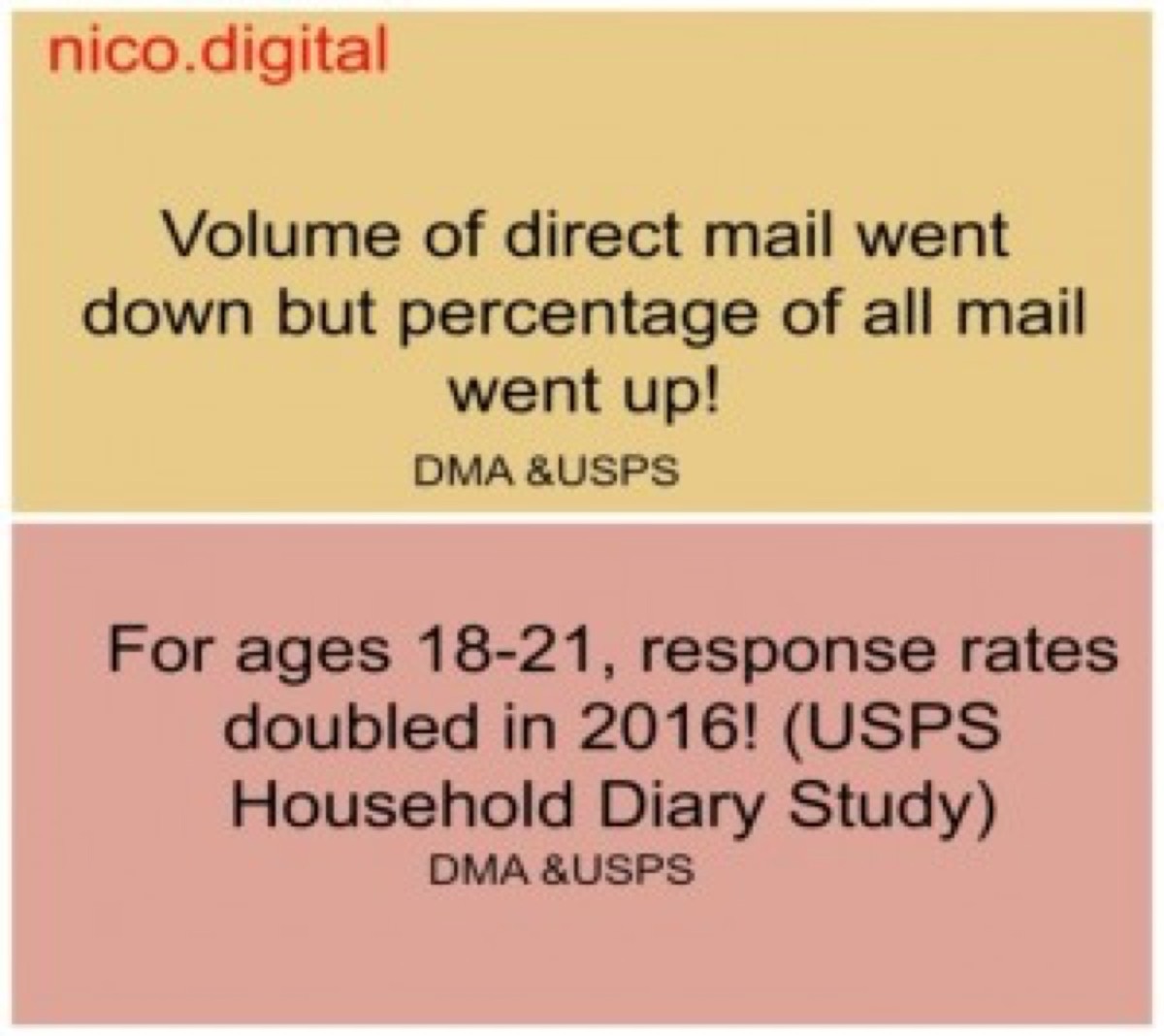
Postcards were thought to be dying out — until marketers realized they had become more powerful precisely because digital had crowded out everything else. The inbox is noisy. The mailbox is quiet. A postcard in a mostly-empty mailbox gets attention.
How Postcards Compare to Other Marketing Channels
Postcards are not competing against digital channels — they complement them. The brightest-performing campaigns use postcards to create physical brand touchpoints that reinforce digital messaging. A postcard recipient who then sees your ad on Instagram already has context; their familiarity with your brand is higher, and their likelihood of converting is greater. Newsletter campaigns work the same way — combining postcards with effective newsletter design that boosts business sales creates a multi-channel presence that dramatically outperforms either channel alone.
The attention timeline for an effective postcard looks like this:
7 seconds for the picture, company name, and logo. If those connect, the reader spends another 10–20 seconds on the offer. If the offer resonates, they spend 20+ seconds re-reading and considering action.
Within a minute, you can have your brand noticed, evaluated, and acted upon. That is an efficiency that most digital channels struggle to replicate for the same cost.
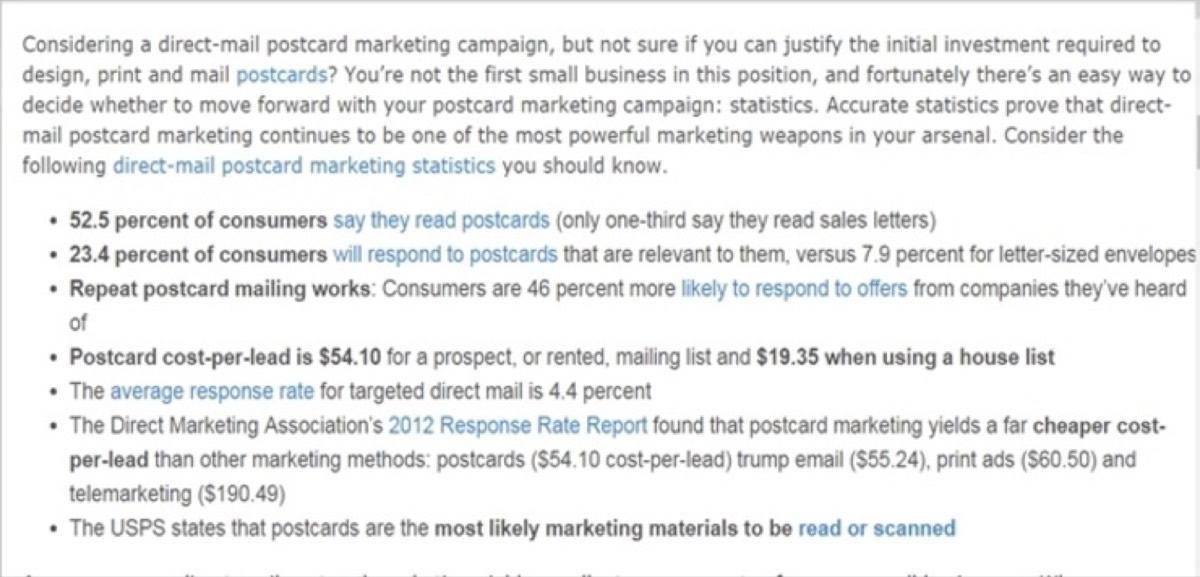
23.4% of consumers will respond to postcards when the content is relevant to their needs and situation.
Looking for professional designs that apply these strategies? See Digital Polo's plans →
9 Rules for an Effective Postcard Campaign
Rule 1: Lead with a Strong Image
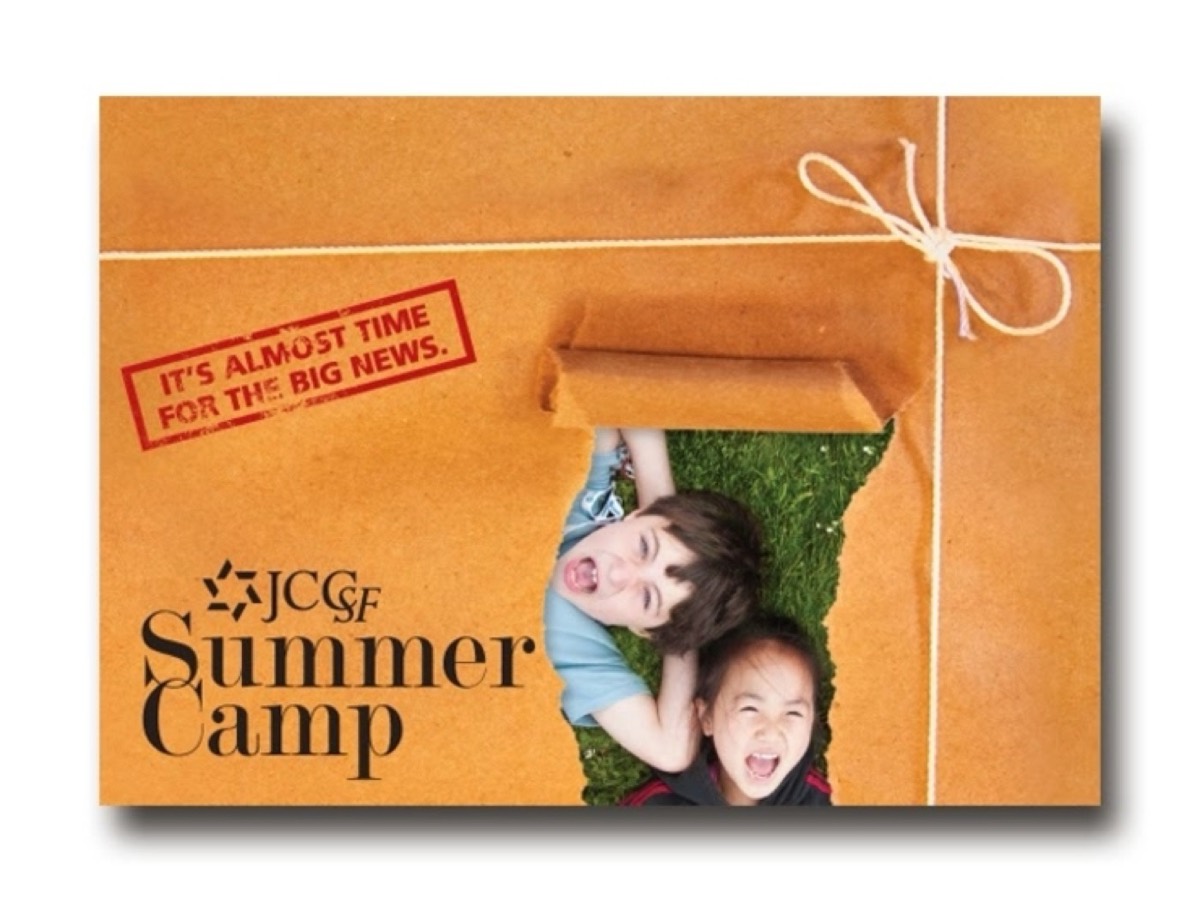
An attractive, relevant image is the first thing that stops a reader. You cannot afford to be generic here. Use a clear, colorful, high-quality image that directly relates to your message. The image should do most of the communicating — if it requires explanation, it is not the right image.
Rule 2: Write a Clear, Concise Headline

A single powerful headline paired with a compelling image can carry the entire postcard. Do not use jargon or complicated language. Simple, direct words that almost anyone can understand in a glance are far more effective than clever copy that requires effort to parse.
Rule 3: Keep Copy Short and Purposeful
The offer, the address, and the contact details — that is all the copy you need. Resist the urge to fill every inch of space with words. Imagine each word costs $1,000 to print. That discipline will produce far stronger copy than any other editing technique.
Rule 4: Know Your Campaign Objective
Are you building brand awareness, promoting a limited offer, announcing an opening, or driving traffic to a website? Each goal requires a different tone, a different call to action, and a different target list. Clarity about the campaign objective is the foundation everything else is built on.
Rule 5: Personalize Where Possible
Personalization dramatically improves response rates. When a recipient sees their own name on a piece of mail, they engage with it differently than they do with generic mass-mail. Even simple personalization — "Dear Sarah" instead of "Dear Customer" — can meaningfully lift response rates.
Rule 6: Choose the Right Size
Size matters in direct mail. A 6×11 postcard stands out in a standard mail stack and provides enough space to include a photo, an offer, a coupon, or even a map — all without looking cluttered. Oversized postcards consistently outperform standard-sized pieces.
Rule 7: Define Your Target Audience Precisely
A postcard promoting luxury leather goods should reach women in specific income brackets, not every household in a ZIP code. The more precisely you define your audience, the higher your response rates and the better your ROI. Broad targeting produces junk mail. Precise targeting produces results.
Rule 8: Lead with a Compelling Offer
The strongest lever for driving immediate response is an offer with a deadline. Free samples, percentage discounts, exclusive access, limited-time promotions — all of these create urgency and give recipients a reason to act now rather than set the postcard aside. An open-ended offer without a deadline is an invitation to procrastinate indefinitely.

Case Study 1: Free Sample Offer
A manufacturer of skin-care products mailed free samples to a targeted list of licensed estheticians — high-end skincare professionals. The campaign achieved a 7.5% response rate. The two most important factors were the offer (free samples with genuine value to the recipient) and the precision of the targeting list. The copy played a supporting role, but without the right offer and the right audience, no amount of great writing would have produced the same result.
Rule 9: Plan the Campaign as a System
The most effective direct mail campaigns are not one-off sends — they are multi-touch sequences. A series of three well-timed postcards to a carefully curated prospect list dramatically outperforms a single mass send. Plan the campaign arc, define the follow-up sequence, and integrate the postcard campaign with your digital touchpoints for maximum effect.
Case Study 2: Multi-Channel Postcard Campaign
A major credit card company sent direct mailers offering three response paths: online, by phone, or by return mail. The mailer prominently featured a URL for an online application with the promise of a decision in as little as 60 seconds. Result: approximately 22,000 people per month reached the landing page by searching that URL. The physical postcard drove digital traffic at scale — a powerful example of offline-to-online conversion.
Understanding Postcard Marketing ROI
ROI in postcard marketing is rarely immediate — it is built through customer lifetime value. If a single campaign converts a prospect into a loyal customer who spends with you for years, the initial cost of the mailing becomes negligible. Calculate ROI with the long view: what is a new customer worth over their full relationship with your business? A well-designed sales sheet can do similar work in a sales context — the 10-step process for creating a high-converting sales sheet applies many of the same principles as a successful postcard campaign.
Think creatively about your offer. If free samples are not feasible, offer something experiential — a behind-the-scenes facility tour, an exclusive tasting event, a complimentary consultation. There is always something your business can offer that creates genuine value for prospects without unsustainable cost to you.
Common Postcard Marketing Mistakes to Avoid
Targeting the wrong audience is the most expensive mistake in direct mail. A beautifully designed postcard sent to the wrong list is still junk mail. Invest in list quality before you invest in creative.
Unclear or unrelated imagery breaks the communication chain immediately. Every visual element must connect directly to the offer and the brand.
Cluttered or dense copy defeats the purpose of a postcard's format. If you need paragraphs to explain your offer, the offer itself may need rethinking.
No clear call to action leaves interested readers without a next step. Every postcard needs one dominant CTA — a phone number, a URL, a deadline, a code.
Treating the postcard as a sales pitch pushes people away. A postcard should invite, intrigue, and offer value — not close a sale. Use it to generate leads and drive traffic, then let your follow-up channels do the selling.
Postcards are a great tool for generating sales leads, introducing a new product, promoting special offers, staying connected with existing customers, and driving traffic to a website. Google, Microsoft, and IBM all continue to use direct mail alongside their digital marketing programs. When the world's largest digital companies still invest in print, there is a strong signal worth paying attention to. If you're also looking to strengthen your digital direct channel, a comparison of the best email marketing software platforms will help you pick the right tool for your follow-up campaigns.
The golden rule of postcard marketing is elegantly simple: make the right offer to the right people in the right way at the right time. Execute that well, and your response rates will surprise you.
Digital Polo designs high-impact postcards and direct mail pieces for one flat monthly fee with unlimited revisions — so your campaigns always launch with professional creative. Start for $399/mo → | Soulmate at $899/mo →
Frequently Asked Questions About Postcard Marketing
What response rate should I expect from a postcard marketing campaign? Response rates vary by industry, offer quality, and targeting precision. Industry data shows postcards averaging a 4.25% response rate — higher than email, social media, and display advertising. Well-targeted campaigns with compelling offers to house lists can achieve 5% or more. Cold prospect lists typically yield lower rates, around 1–3%.
How much does a postcard marketing campaign cost? Costs include design, printing, list rental or purchase, and postage. Printing costs for standard postcards run roughly $0.05–$0.15 per piece at volume. Postage varies by size and postal class. A well-executed campaign of 1,000 pieces can be launched for a few hundred dollars, making it accessible even for small businesses. ROI depends heavily on the value of a converted customer.
What size postcard works best for direct mail campaigns? Larger postcards (6×9 or 6×11) consistently outperform standard sizes in response rate studies. They stand out in the mailbox, cannot be hidden inside an envelope, and provide more space for imagery and offers without looking cluttered. The additional printing cost is typically offset by meaningfully higher response rates.
Should I personalize my postcard campaign? Yes, whenever practical. Even simple first-name personalization improves response rates noticeably. More sophisticated personalization — referencing the recipient's location, past purchases, or specific interests — can lift response rates substantially further. Variable data printing makes personalization at scale cost-effective for campaigns of any size.
How do I measure the ROI of a postcard campaign? Assign a unique phone number, URL, or promo code to each campaign so you can track exactly how many responses it generates. Calculate the customer lifetime value of each converted lead, not just the first purchase. Also measure downstream effects: did recipients search for your brand online after receiving the mailer? Use a multi-touch attribution model to capture the full impact, especially if you are running postcard campaigns alongside digital advertising.